Container Gardening for Small Spaces
Grow vegetables, herbs, and flowers in pots on any balcony or patio. Container picks, soil mixes, and watering tips for small-space gardeners.
Key takeaways
- Use pots at least 12 inches deep for most vegetables
- Never use garden soil in containers - it compacts and drowns roots
- Fabric grow bags cost $2-5 each and outperform plastic pots for root health
- Self-watering containers cut daily watering to once every 3-4 days
- A sunny balcony can produce 20-30 pounds of tomatoes per season from two pots
Why container gardening works anywhere
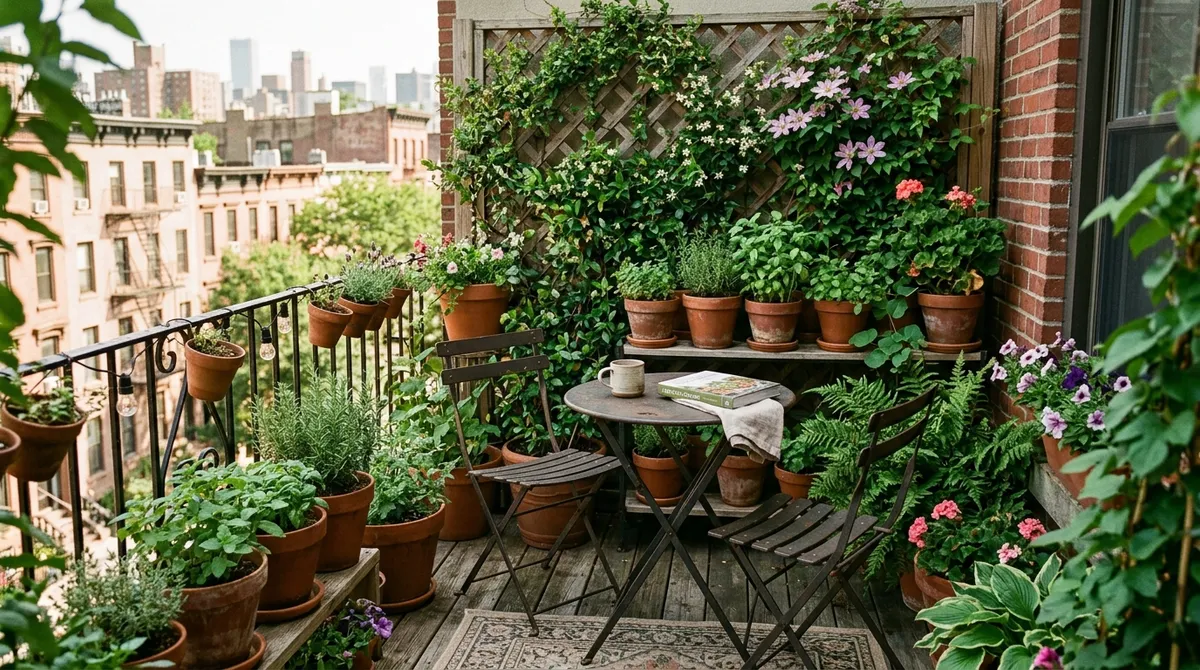
You do not need a yard to grow a garden. A sunny balcony, patio, front stoop, or even a fire escape railing can support containers that produce real food and beautiful flowers.
Container gardening gives you control over soil quality, drainage, and sun exposure that in-ground gardening cannot match. You pick the exact soil mix each plant needs. You move pots to chase the sun or dodge a hailstorm. If you rent and cannot dig up the lawn, containers let you garden without leaving a mark.
More than 35 million US households grew food in containers in 2024, according to the National Gardening Association. That number keeps climbing as more people move into apartments and townhouses.
Choosing the right containers
Not all pots are created equal. The container you pick affects how often you water, how hot roots get, and how well plants grow.
| Container type | Pros | Cons | Best for | Cost |
|---|---|---|---|---|
| Terracotta | Breathable, classic look | Heavy, dries fast, cracks in frost | Herbs, Mediterranean plants | $8-25 |
| Plastic | Lightweight, cheap, retains moisture | Gets brittle in sun, poor airflow | Annuals, moving frequently | $3-15 |
| Fabric grow bags | Best root health, folds flat for storage | Dries faster than plastic, not decorative | Vegetables, root crops | $2-5 |
| Self-watering | Consistent moisture, less daily work | More expensive, can waterlog in rain | Tomatoes, peppers, lettuce | $15-40 |
| Glazed ceramic | Beautiful, retains moisture | Very heavy, expensive | Statement plants, patio focal points | $20-80 |
| Wood (cedar/redwood) | Insulates roots, attractive | Eventually rots, heavy when filled | Raised planters, permanent spots | $15-50 |
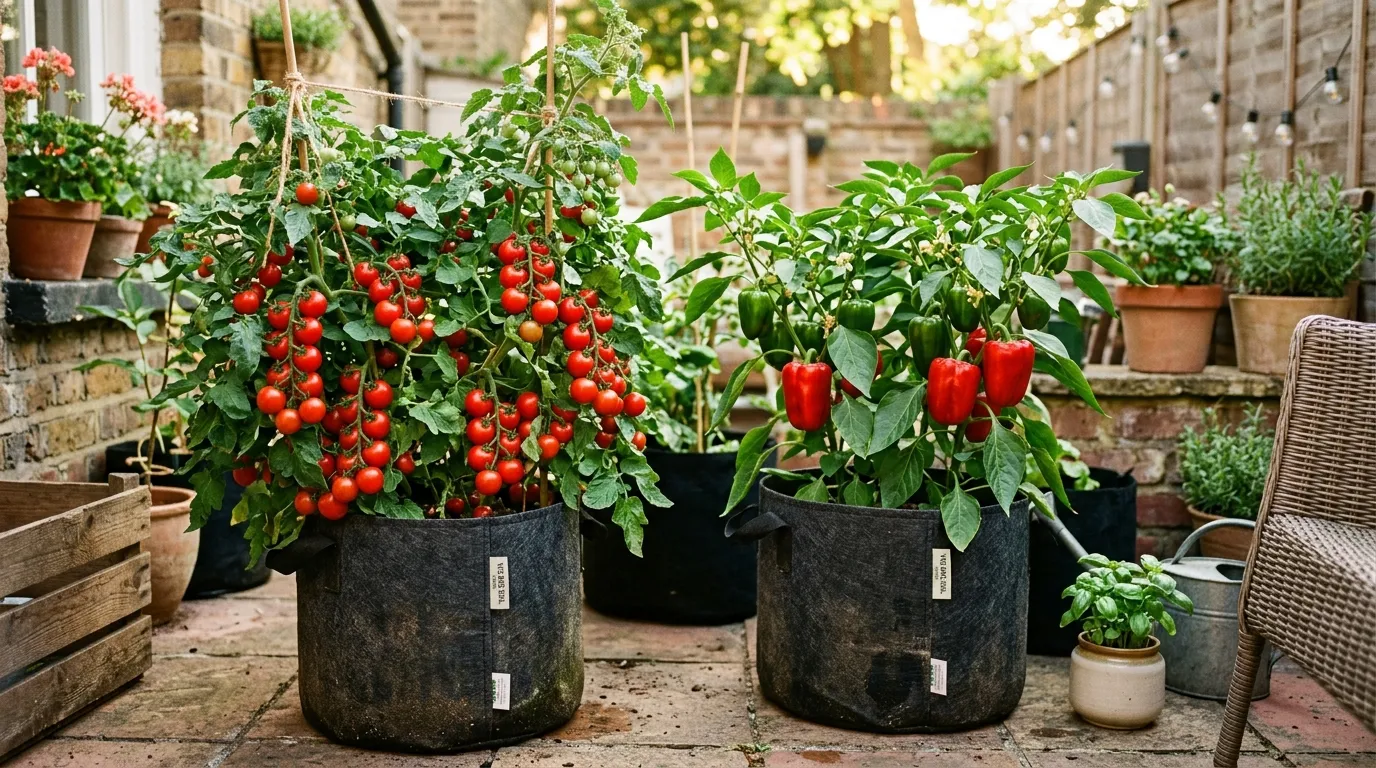
Size matters more than material. A bigger pot holds more soil, which holds more moisture and nutrients. For most vegetables, go with containers at least 12 inches deep and 12 inches wide. Tomatoes and peppers do best in 5-gallon (14 inch) pots or larger.
Drainage holes are mandatory. Every container needs holes in the bottom. No exceptions. Sitting water rots roots within days. If you buy a decorative pot without holes, drill them yourself or use it as a cachepot with a smaller nursery pot inside.
The right soil mix
Garden soil from your yard will kill container plants. It compacts in a pot, blocking air from reaching roots and holding too much water. Always use a soilless potting mix designed for containers.
A good container mix has three jobs: hold enough moisture for roots to drink, drain excess water so roots breathe, and stay loose enough for roots to grow through easily.
Store-bought potting mix works fine for most situations. Look for mixes that contain peat moss or coco coir, perlite or vermiculite, and compost. Avoid anything labeled “garden soil” or “topsoil.”
DIY mix recipe: Combine equal parts peat moss (or coco coir), perlite, and compost. Add 1 tablespoon of slow-release fertilizer per gallon of mix. This blend costs roughly half the price of premium bagged mixes and performs just as well.
Refresh or replace mix each season. Potting mix breaks down over time, losing its structure and drainage. At minimum, dump out containers each spring, fluff the old mix with fresh perlite and compost, and refill.
What to grow in containers
Almost anything grows in a pot if the container is big enough. Some plants are natural fits for container life.
Vegetables
Cherry tomatoes, peppers, lettuce, and herbs are the classic container crops. Determinate (bush-type) tomato varieties like Patio Princess and Bush Early Girl stay compact and produce heavily in 5-gallon pots.
Bush beans, radishes, and spinach grow fast and take up little space. You can succession-plant them every two weeks for a continuous harvest from spring through fall.
Herbs
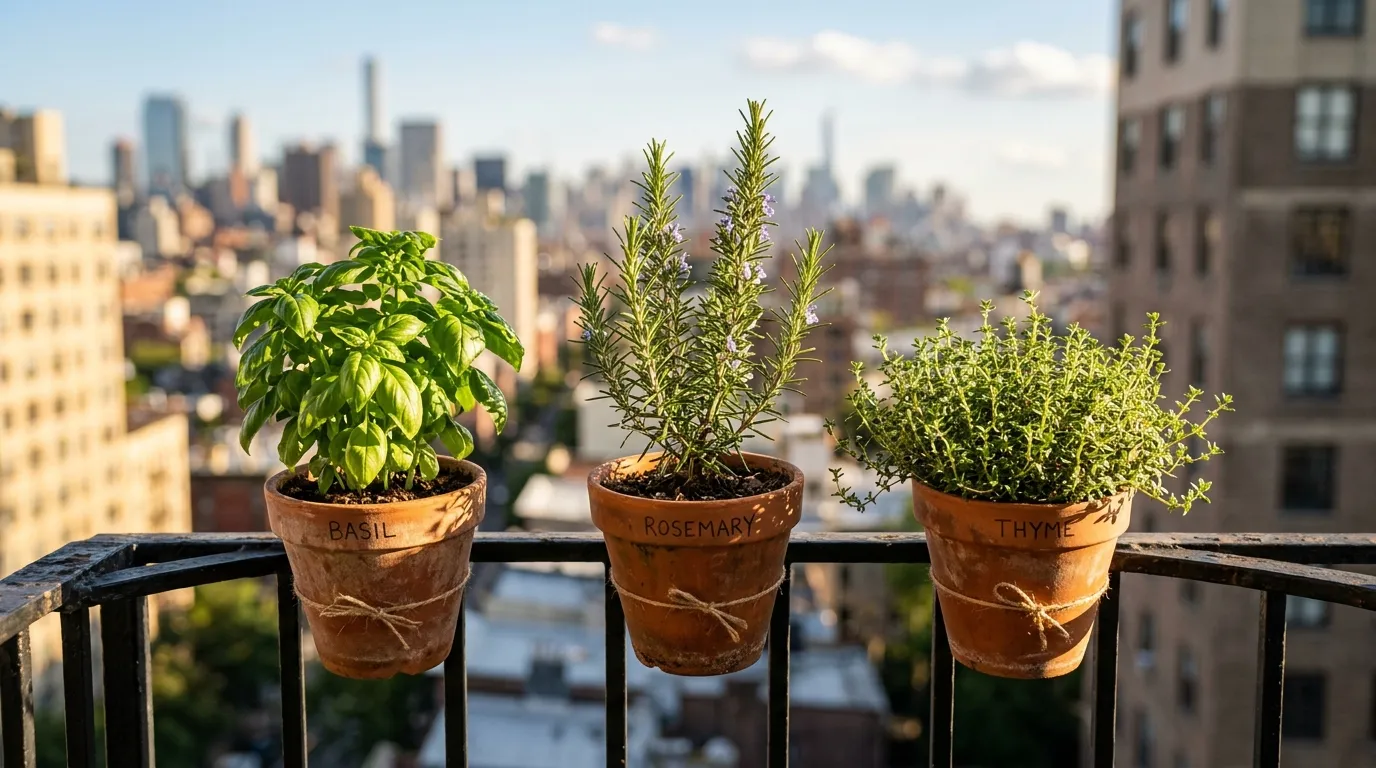
Herbs are the single best return on investment for container gardeners. A $3 basil plant saves you $50 or more on grocery store herbs through the season. Grow basil, cilantro, parsley, rosemary, thyme, and mint in separate pots. Keep mint in its own container because it spreads aggressively and will choke out other plants.
Flowers
Petunias, marigolds, zinnias, and nasturtiums thrive in containers and attract pollinators to your balcony. Nasturtiums pull double duty as both an ornamental and an edible plant.
| Crop | Minimum pot size | Sun needed | Days to harvest | Yield per pot |
|---|---|---|---|---|
| Cherry tomatoes | 5 gallon | 8 hours | 60-70 | 8-12 lbs |
| Bell peppers | 5 gallon | 6-8 hours | 70-85 | 5-8 fruits |
| Lettuce | 2 gallon | 4-6 hours | 30-45 | 6-8 harvests |
| Basil | 1 gallon | 6 hours | 30-45 | All season |
| Bush beans | 3 gallon | 6-8 hours | 50-55 | 1-2 lbs |
| Radishes | 2 gallon | 4-6 hours | 25-30 | 10-15 roots |
| Strawberries | 3 gallon | 6 hours | 60-90 | 1-2 pints |
Watering containers correctly
Watering is the biggest challenge in container gardening. Pots dry out far faster than garden beds, especially in summer heat and wind.
Check daily. Push your finger 2 inches into the soil. If it feels dry, water. If still moist, wait. Small pots and terracotta containers may need water twice a day in July and August.
Water until it drains. Always water until liquid runs from the bottom holes. This ensures the entire root zone is moist, not just the top inch. Light sprinkles leave the bottom of the pot bone dry where roots need moisture most.
Morning watering is best. Plants absorb water most efficiently in the morning. Evening watering leaves soil wet overnight, which can encourage fungal diseases.
Self-watering containers are worth the investment for anyone who travels or forgets to water. They have a reservoir in the bottom that wicks moisture up to roots as needed. One fill of the reservoir lasts 3-5 days for most plants.
Drip irrigation kits designed for containers cost $25-40 and connect to a hose bib with a battery-powered timer. They are the most reliable option for balcony gardens with more than six containers.
Vertical gardening in tight spaces
When floor space runs out, grow up. Vertical gardening triples your growing area without adding a single square foot of footprint.
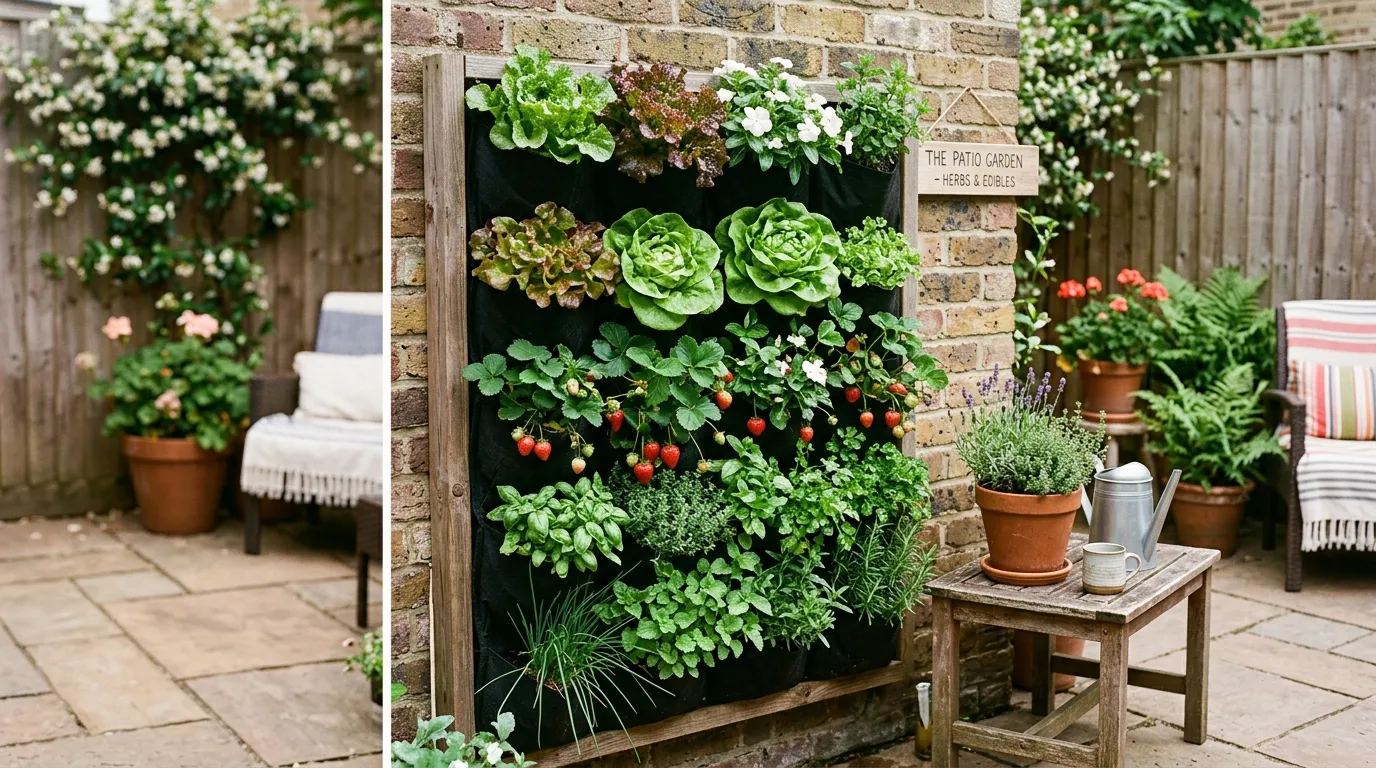
Wall-mounted pocket planters hold herbs and small lettuce plants in fabric or plastic pouches attached to a wall or fence. A 3-foot-wide pocket planter holds 12-15 plants in about 2 square feet of wall space.
Trellised containers let vining crops like cucumbers, pole beans, and small melons climb instead of sprawl. Push a 5-foot trellis into a large pot and train the vine up it. One 5-gallon pot with a trellis can produce 10-15 cucumbers.
Stacked planters and tiered plant stands hold multiple pots in a small footprint. A three-tier corner stand fits in a 2x2 foot space and holds six to eight pots.
Hanging baskets work well for trailing strawberries, cherry tomatoes (tumbling varieties like Tumbling Tom), and herbs. Hang them from balcony railings, overhead hooks, or shepherd hooks in patio pots.
Feeding container plants
Container plants exhaust their soil nutrients faster than in-ground plants because every watering flushes some fertilizer out the drainage holes.
Slow-release granules mixed into potting soil at planting time feed plants for 3-4 months. Osmocote and similar products are widely available and easy to use.
Liquid fertilizer every two weeks during the growing season supplements slow-release feeding. Use a balanced formula (10-10-10) for most plants, and switch to a high-phosphorus blend (5-10-5) when tomatoes and peppers start flowering.
Compost tea made by soaking a bag of compost in water for 24-48 hours provides gentle, organic nutrition. Use it as a soil drench every two to three weeks.
Do not overfeed. More fertilizer does not mean more fruit. Excess nitrogen pushes leafy growth at the expense of flowers and fruit production. If your tomato plant is huge and green but barely fruiting, cut back on nitrogen.
Overwintering and end-of-season care
At the end of the growing season, you have choices depending on what you grew and where you live.
Annual vegetables and flowers are done once frost hits. Pull the plants, dump the old soil into a compost pile or garden bed, and clean your containers before storing them.
Perennial herbs like rosemary, thyme, and oregano can overwinter in containers if you move them to a sheltered spot. In Zones 7 and above, a south-facing wall usually provides enough protection. In colder zones, bring them indoors near a sunny window.
Protect ceramic and terracotta pots from freeze-thaw cracking by emptying them and storing them in a garage or shed. Fabric grow bags fold flat and store in a drawer.
Plan your next season in winter. Sketch out which pots get which plants, order seeds by February, and start transplants indoors 6-8 weeks before your last frost date.
Sarah Mitchell is a Master Gardener and garden writer based in the Pacific Northwest. She has been growing food and flowers for over 15 years across USDA zones 7 and 8.